

By Oyewole Edward | March 18, 2026
Nigeria’s leading role with USDT and USDC.
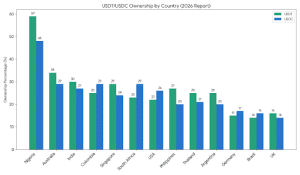
Recent research puts Nigeria at the top of the global rankings for stablecoin ownership, especially for large dollar‑pegged assets like USDT and USDC. Survey data suggests that a majority of Nigerian crypto users hold USDT and nearly half hold USDC, placing the country ahead of several developed and emerging economies. This leadership reflects a combination of factors: high mobile and internet penetration, a young and tech‑savvy population, and economic conditions that make dollar‑linked digital assets attractive for everyday use. Rather than treating crypto as pure speculation, many users in Nigeria are deploying stablecoins as practical financial tools for payments, savings, and commerce.
Why USDT and USDC matter for everyday users
USDT (Tether) and USDC (USD Coin) are both stablecoins designed to track the value of the US dollar, so one unit is intended to remain close to one dollar. For someone in an economy with a volatile local currency, this offers a portable, blockchain‑native way to store value in a more stable unit without needing a traditional dollar bank account. This allows fast transfers across borders at relatively low cost compared to many traditional remittance channels. In practise, Nigerians use them to get paid by foreign clients, send money to family, hold savings that are less exposed to local currency swings, or trade into and out of other crypto assets when opportunities arise. For professionals, USDT and USDC also serve as base trading pairs and liquidity anchors across centralized and decentralized venues.
How people actually use stablecoins in Nigeria
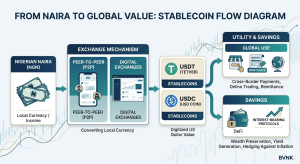
Use cases in Nigeria go far beyond trading. Freelancers and remote workers often request payment in USDT or USDC from overseas clients, then convert some portion to local currency through peer‑to‑peer markets or local exchanges. Small businesses use stablecoins to pay suppliers, settle invoices, and manage short‑DeFi cash flow. On the DeFi side, some users deposit stablecoins into protocols that offer yield, borrow against them, or swap them into other assets when needed. For beginners, the key learning is that a stablecoin wallet can function somewhat like a dollar account you control directly. For professionals, the flows in and out of these wallets form a new data layer for understanding cross‑border commerce and retail FX behavior.
Why Nigeria’s position matters globally
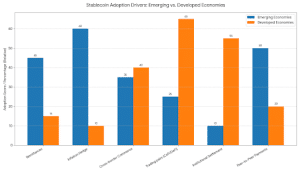
Nigeria’s leadership in stablecoin adoption signals a broader shift in how global finance may evolve. When individuals and businesses in emerging markets can hold and transact in digital dollars with just a smartphone, the traditional boundaries of domestic banking systems become less rigid. This can increase financial inclusion and give people more tools to manage volatility, but it also challenges existing frameworks for FX, capital controls, and banking regulation. For the crypto industry, Nigeria’s example shows where product design, education, and infrastructure investment can have outsized impact: user‑friendly wallets, reliable on‑ and off‑ramps, and localized education in major local languages.






Wow, this is really insightful. Nigeria keeps going strong .
India was leading – until they tried to regulate what they didn’t fully understand. They introduced unfavorable taxes – liquidity vanished overnight and exchange activity went down about 70%.
Nigeria should not make the mistake of over-regulation but strategically protect the crypto industry in Nigeria. Incentivize the system to grow, avoid rent extraction.